

Why Digital Stethoscopes are Becoming Essential in Modern Patient Care
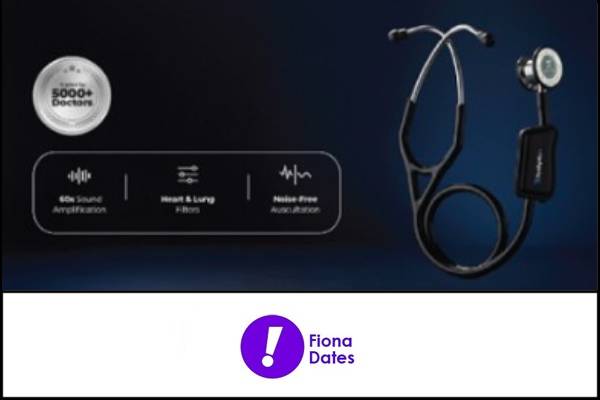
In today’s rapidly evolving healthcare environment, precision, efficiency and accessibility are more important than ever. From primary care clinics to telehealth platforms, healthcare providers are adopting digital tools that enhance diagnostic accuracy and improve patient outcomes. One such innovation gaining widespread attention is the digital stethoscope.
While the traditional stethoscope remains a symbol of medicine, its digital counterpart is redefining how clinicians listen, interpret and act on patient data.
Bridging the Gap Between Listening and Diagnosis
Auscultation, the act of listening to internal body sounds, has always depended heavily on a clinician’s experience and hearing ability. However, subtle abnormalities in heart and lung sounds can sometimes go undetected, especially in noisy environments or early-stage conditions.
Digital stethoscopes address this challenge by offering enhanced sound amplification and filtering. These devices allow healthcare professionals to isolate specific frequencies, making it easier to detect abnormalities such as murmurs, wheezes and crackles. This leads to earlier diagnosis and more effective treatment planning.
Improving Clinical Accuracy in Busy Environments
Healthcare settings are often fast-paced and noisy, which can interfere with accurate auscultation. Digital stethoscopes are designed to overcome this limitation through advanced noise reduction technologies.
By minimizing background interference, clinicians can focus solely on the patient’s internal sounds. This is particularly beneficial in emergency departments, outpatient clinics and high-volume hospitals where time and accuracy are critical.
Empowering Telemedicine and Remote Monitoring
The rise of telemedicine has transformed how patients access healthcare services. Digital stethoscopes play a key role in this shift by enabling remote auscultation. With wireless connectivity and mobile integration, clinicians can listen to patient sounds in real time, even from a distance.
This capability is especially valuable in rural or underserved areas where access to specialists may be limited. By sharing recorded data securely, primary care providers can collaborate with specialists to deliver timely and accurate diagnoses.
Healthcare professionals exploring reliable digital auscultation tools can consider solutions like a digital stethoscope for telemedicine, which combines portability with advanced sound processing features.
Enhancing Patient Documentation and Continuity of Care
Another significant advantage of digital stethoscopes is their ability to record and store auscultation data. This creates a valuable archive of patient information that can be reviewed over time.
Clinicians can track disease progression, compare past and present findings and make more informed decisions. This level of documentation improves continuity of care and reduces the chances of misdiagnosis.
Transforming Medical Education and Training
Medical education is also benefiting from the adoption of digital stethoscopes. Students can record real patient sounds and revisit them during study sessions, reinforcing their learning.
Educators can use these recordings to demonstrate various conditions, helping students develop a deeper understanding of clinical signs. This hands-on, data-driven approach enhances both confidence and competence in future healthcare professionals.
Increasing Accessibility for Healthcare Providers
Digital stethoscopes also improve accessibility for clinicians with hearing challenges. Amplification and playback features allow them to perform accurate assessments without relying solely on natural hearing.
In addition, these devices simplify the process of sharing clinical data among healthcare teams, ensuring that everyone involved in patient care has access to the same information.
The Future of Patient Centered Diagnostics
As healthcare continues to embrace digital transformation, the role of smart diagnostic tools will only grow. Future advancements may include integration with artificial intelligence, enabling automated detection of abnormalities and decision support for clinicians.
Digital stethoscopes are already laying the foundation for this future by combining traditional diagnostic methods with modern technology.
Conclusion
Digital stethoscopes are more than just an upgrade to a traditional tool. They represent a shift toward more precise, connected and patient-centered care. By improving diagnostic accuracy, enabling remote consultations and supporting medical education, they are becoming an essential part of modern healthcare practice.
For healthcare providers looking to enhance their clinical capabilities and adapt to evolving patient needs, adopting digital auscultation technology is a step in the right direction.

